Written by:
 Sophia de Sousa
Our first event in Series 7 of Glass-House Chats, Designing Third Spaces, was co-hosted with Elisa Engel and Katherine Leat of Citizen Architects. Together with an international group of participants, we explored the concept of the third space – a place that is neither where we live nor work. Our group brought together lived and professional experience and expertise from design and urbanism, community organising and activism, social enterprise, health and wellbeing, the arts, culture and education. This made for an evocative discussion about the third spaces we had encountered or managed.
Key Themes
We were able to ground our conversation about third spaces in the practical experience of our co-hosts, who set up and manage a community space in the Old St Leonard’s Hall in Exeter, which is also home to their architecture practice. Other participants shared their experience of both managing and using third spaces, and this led us to consider both shared buildings and public green spaces, and the differences between these contexts for community use. We reflected on the qualities of third spaces, and how this impacts on how welcoming they feel to users. We also explored the tension between the intentional curation of third spaces, and the freedom for people to shape what happens there more organically. All of these were wrapped up in the notion of the commons, and the importance of a collective sense of responsibility for the spaces we share.
The Qualities of Successful Third Spaces
We began our conversation reflecting on the importance of third spaces, and the role that they play in communities. Unlike where we work and for many people where we live, we choose the third spaces we frequent. We choose places that we hope will bring us opportunities for connection with other people, activities that help improve our health and wellbeing, and just a bit of joy.
So what are the qualities that make a third space attractive to people? For some, it is what happens there, the activities that draw us in. For others, it is the very qualities of the environment created, whether a calm neutral space, or one bursting with colour and dressed to activate our senses. The qualities of a space can also influence our sense of ownership and freedom to adapt it. Some are set up as a kind of blank canvas that is easily transformed, shaped by different people and activities. Others are more intentionally designed to support specific uses or users. Some of our most treasured third spaces sit within heritage or locally significant buildings or parks. Others might be the opportunistic reactivation of an unloved, underused space or temporary in nature and construction. How these spaces are shaped inevitably affects how we use them and who even crosses the threshold.
We spoke of the sensory and emotional impact of entering a shared space, and what can activate a sense of welcome and belonging. While different spaces serve different functions and users, there was a shared feeling within our group that a space that looks and feels cared for goes a long way in making those who use it feel cared for. Good design alone is not enough. How such spaces are managed and maintained is also crucial to their success.
Shared Responsibility for the Commons
We all deserve great places, and yet so much of the social infrastructure that would have typically constituted our shared third spaces has been undermined by the systematic reduction in investment in social infrastructure within our towns and cities. This observation led to an interesting discussion around the notion of the commons, and our collective understanding of and relationship with shared community spaces. One of our group had managed a community space which had been made available to local people with the expectation that they left the space as they found it. While in the first year, people respected this and looked after the space, as time went by people seemed to take less and less responsibility for keeping it clean and tidy.
Inevitably, someone has to take responsibility for shared community spaces. If the public is invited into a building, it needs to be insured, heated, cleaned. If a space is made available for others to use at no cost or to hire, somebody needs to coordinate that usage. Traditional funding mechanisms place that responsibility in the hands of small groups of people, often community-based organisations such as community centres. Third spaces such as churches and village halls rely increasingly on volunteers. However, what is reasonable to expect from volunteers, and when should people be paid for assuming responsibilities that impact on the safety and sustainability of that space? What role can each of us play in looking after the spaces we use together, and what is not reasonable to expect of volunteers or users?
Curating Third Spaces
We also talked about who should curate third spaces, and to what degree. Again, Old Saint Leonard’s Hall offered a useful example of a range of activities, some programmed by Citizen Architects and others by local groups and individuals. One of their most successful activities was their First Friday Society sessions, when once a month they simply open the doors to the hall and local people can drop in, have a chat, share food, play games and generally just connect with each other. Feedback from those who have taken part is that this has helped a number of local people build relationships with their neighbours and connect into a wider social network. For some who live alone and do not have children or family members nearby, such informal spaces for connection can help combat loneliness.
We agreed that curated activities can also play an important role in bringing people into the third space. Whether it’s a skills share session, a cinema club, a yoga class or a gig, a diverse programme of activities helps activate a diverse mix of users. This in turn can be helpful in enabling exchanges across different cultural groups and generations who have interests in common, and who might not otherwise meet either in the workplace or where they live. These third spaces can cater for the individual, but also play a significant role in building community, and curated activities can help people make new connections and build social networks.
Wrapping Up
It was clear from our discussion that third spaces come in all shapes and sizes and mean different things to different people. However, some common threads are useful to consider when thinking about how we might shape third spaces in the future. People crave places for connection with others, and safe and welcoming spaces for people to meet is vital to the health and wellbeing of communities. However such spaces don’t just magically happen. They require management and maintenance, and also a shared sense of ownership and responsibility for their sustainability. It takes a community to make community spaces thrive.
Spotlight Project from Co-hosts Elisa Engel & Katherine Leat
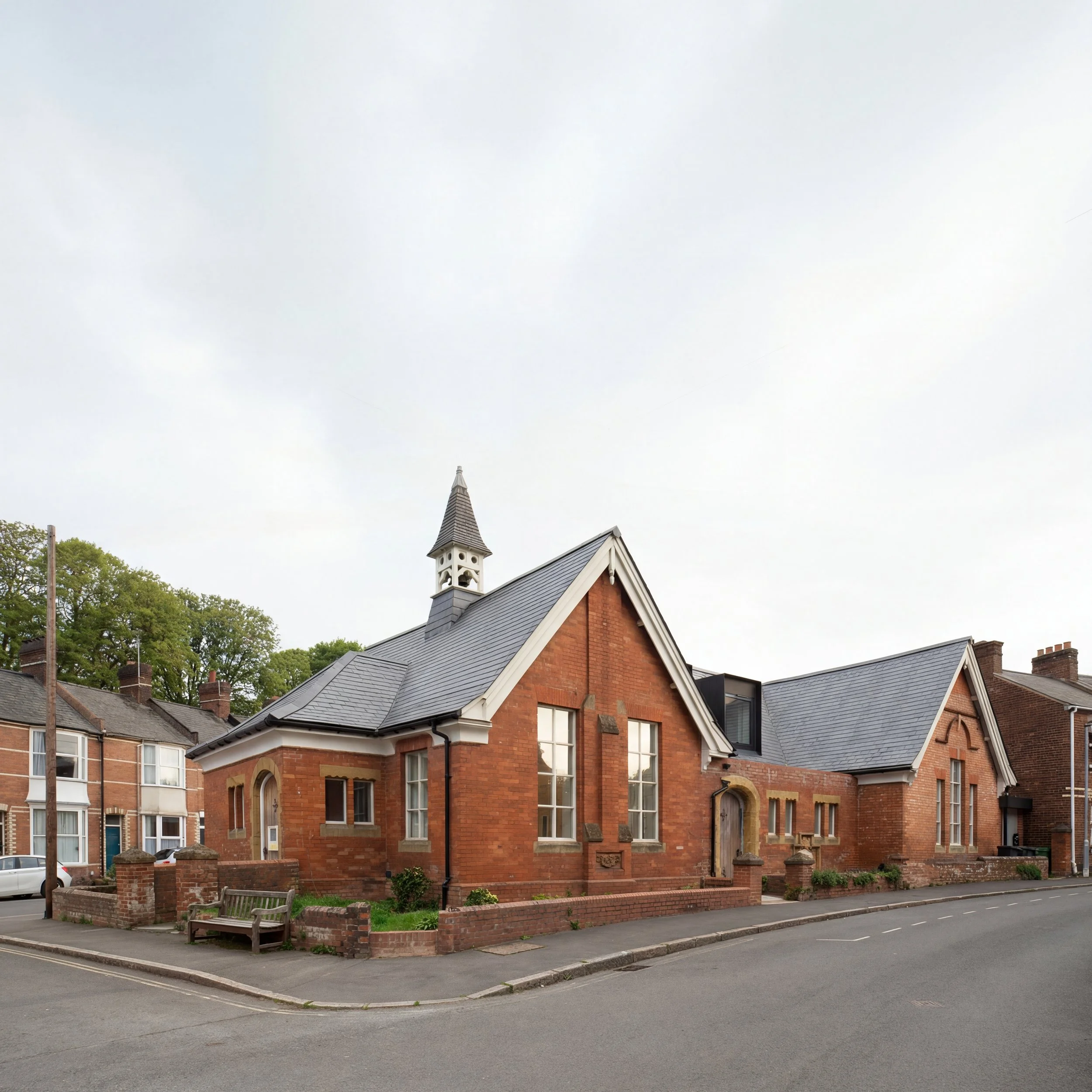
Old St Leonard’s Hall
Old St Leonard’s Hall is a Victorian Sunday School that is now home to the Citizen Architects practice, the home of two of their directors, and a shared neighbourhood space.
When they bought the building, it had stood empty for more than fifteen years. The roof leaked, parts of the structure were failing, and planning permission had already been granted to retain only the façade and turn the building into flats. They saw something different: a building rich in craftsmanship, memory and embodied carbon, waiting for a new chapter.
Before they started designing, they reopened the hall and invited local people back inside for the first time in over a decade. They heard stories of parties, playgroups and celebrations. Although not listed, the building was clearly loved. Those conversations shaped their approach.
The project reimagines how buildings can be shared. Their architectural studio supports the ongoing community use of the hall, creating a model in which work, home and neighbourhood life sustain one another. Old St Leonard’s Hall hosts workshops, arts events and their monthly First Friday Society, where neighbours gather to share food, conversation and company.
For them, retrofit is about more than reducing carbon. It is a way of keeping craftsmanship, heritage and community in active use. Old St Leonard’s Hall is not simply the restoration of a building: it is the recovery of a place.
You can read more about Old St Leonard’s Hall here.