
Written by:
 Guest Author
In this piece, Youth Worker and Lead Intergenerational Practitioner – Ryan McKay (The Citadel) shares his top 3 reasons why he feels The Citadel is a thriving multigenerational place, intergenerational by design. He also recommends things you can consider in your own practice when shaping multigenerational spaces.
10 Years at the Citadel: What Makes a Multigenerational Place Thrive
Having recently celebrated my 10 year workiversary at the Citadel, three reasons stand out as to why it thrives as a multigenerational place: it is a safe place, it encourages connection across generations and it brings generations together through creativity. In the sections that follow, I’ll explore each of these reasons in more detail, beginning with why the Citadel is first and foremost a safe place for all.
1. The Citadel is a safe place for all
In a climate where poverty, social isolation and digital inequality are leading to ever more fractured communities, having safe spaces that welcome all generations has never been more important. Rooted in the Leith community for over 45 years, the Citadel began as a space for young people but has since grown into a place that supports participants across the life span. From young mums with toddlers to older people in their nineties; we are a safe place for all.

At the Citadel, it is the welcome more than the physical features of the building that make it truly safe and inclusive for all ages. Our passionate staff and volunteers make that possible, greeting everyone with warmth and openness. Trusted and deeply committed to the work they deliver, participants know they will be treated with respect and care. Importantly, we also recognise a place can’t feel safe if it feels dull or restrictive. That’s why at the Citadel, safety and fun go hand in hand.
Creating a safe space is never static, it’s something we reflect on regularly. That’s why it’s important to pause and ask:
- How does your space actively create a sense of safety and how is it welcoming for people of all ages?
- What more could you do to build trust and belonging?
2. The Citadel is a place where different generations connect
A listed building steeped in history, having previously been a train station and a pub, The Citadel has always been a place where people of all ages could meet. Today as a community hub, the building continues to create the conditions to enable different generations to connect.

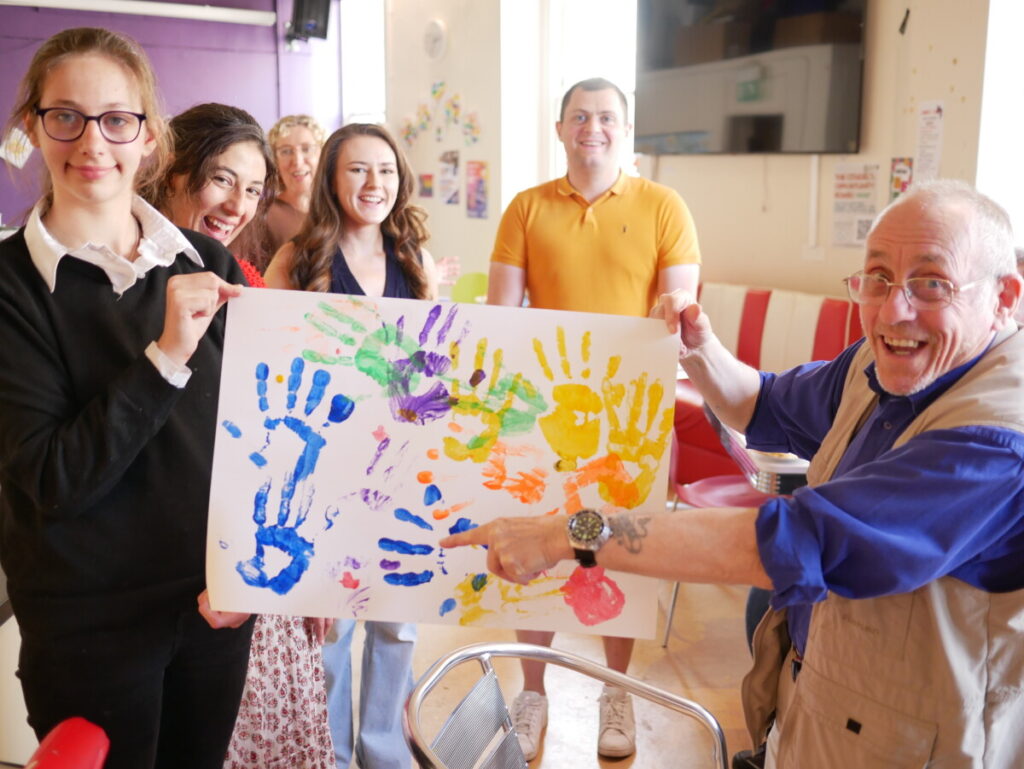
Some of these connections happen spontaneously. Take our Annual General Meeting, well known as more of a celebration than a formal governance event. It allows service users of all ages to come together and celebrate. Other connections are designed with intention. Projects such as our weekly intergenerational cafe – New Spin (delivered in partnership with Pilmeny Development Project), and our award winning Old’s Cool Intergenerational Project, show what’s possible when you create dedicated spaces for intergenerational exchange.
At the Citadel, connection is both spontaneous and intentional and it’s this combination that makes the building more than just a meeting point. It’s a place where meaningful relationships are built and sustained across generations.
Some important questions for anyone thinking about their own space:
- How do you create spontaneous and intentional opportunities for people of different ages to connect?
- What more could you do to encourage relationships that cross generations?

3. The Citadel is a place where creativity brings different generations together
The Citadel is a naturally multigenerational space, but it’s creativity and play that turn it into a place of real intergenerational connection. When people sit side by side making, playing, imagining and storytelling together, they often don’t realise they are consciously connecting. Through these moments, generations see each other in fresh ways, and relationships often continue long after.
Whatever the form, creativity offers participants of all ages the benefits of making and learning together. We have seen this through projects like Hack Your Age, where young and older people explored tech, prototyping and drama side by side, as well as Citadel Love Stories which used the power of intergenerational storytelling to explore both generations’ individual experiences of love and relationships.
Questions worth considering in your own context:
- How can creativity and play be used as vehicles for intergenerational connection?
- What kinds of creative experiences could help different generations to see each other in new ways?
Conclusion
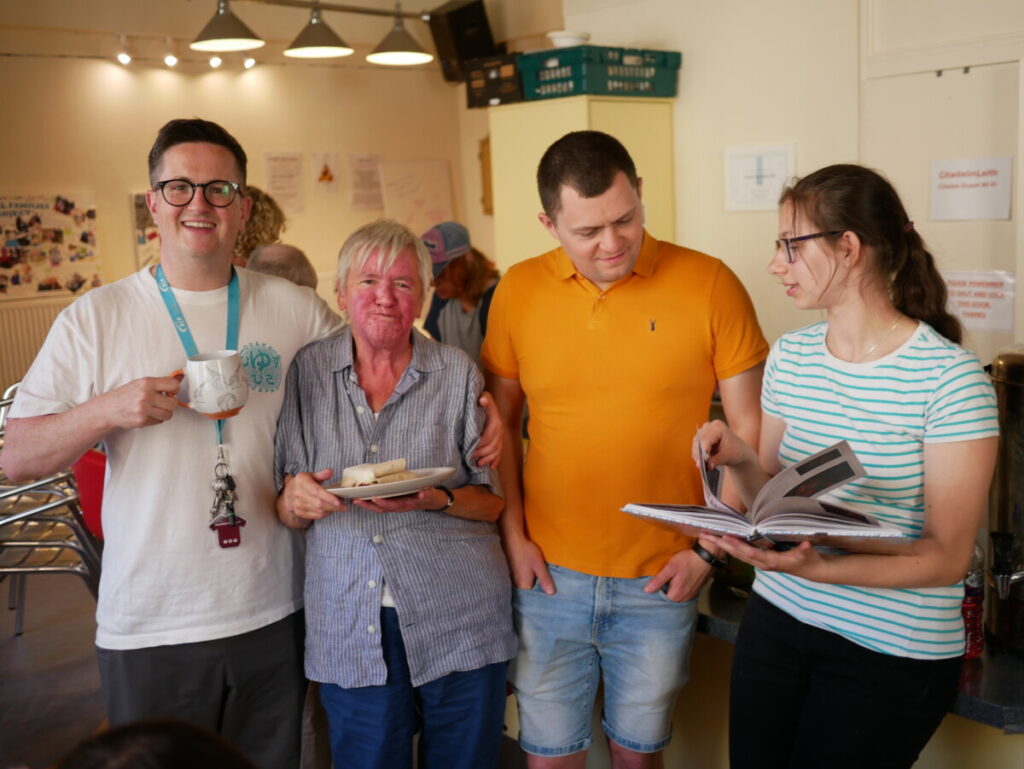
Spaces don’t automatically become places. They take commitment, trust and a willingness to design opportunities for different generations to come together. That is the heartbeat of the Citadel, and it’s the lesson I hope others will take into their own work. When we create spaces that are safe, welcoming and intentionally intergenerational, they can grow into places where communities truly thrive.
To continue the conversation, I regularly share reflections on LinkedIn, or feel free to reach out at ryan@citadelyouthcentre.org.uk if you’d like to see the Citadel in action.
All images courtesy of Ryan McKay and The Citadel.
About the Author

Ryan is an intergenerational practitioner and youth worker passionate about bridging generations, amplifying youth voice, and supporting young people in education. Based at the Citadel Youth Centre in Edinburgh, he designs and leads youth-led projects that strengthen connections, confidence, and community engagement.
- Links: ryan@citadelyouthcentre.org.uk
- LinkedIn: linkedin.com/in/ryan-mckay-3b34a0232