
Written by:
 Sophia de Sousa
On 19 October, we held the second in-person event in our 2025/26 WEdesign series, Multigenerational Places at Arup’s Charlotte Street office in central London. Multigenerational Places: Practice was the first time we had convened a WEdesign breakfast event specifically for practitioners, and we are grateful to Arup for working with us to both host this event and to help us shape it. We were delighted to see both familiar and new faces in the room. A quick audit of those attending found that we had brought together practitioners in their 20s, 30s, 40s, 50s and 60s, ranging in career stage from recent graduate to seasoned director, and representing practices large and small.
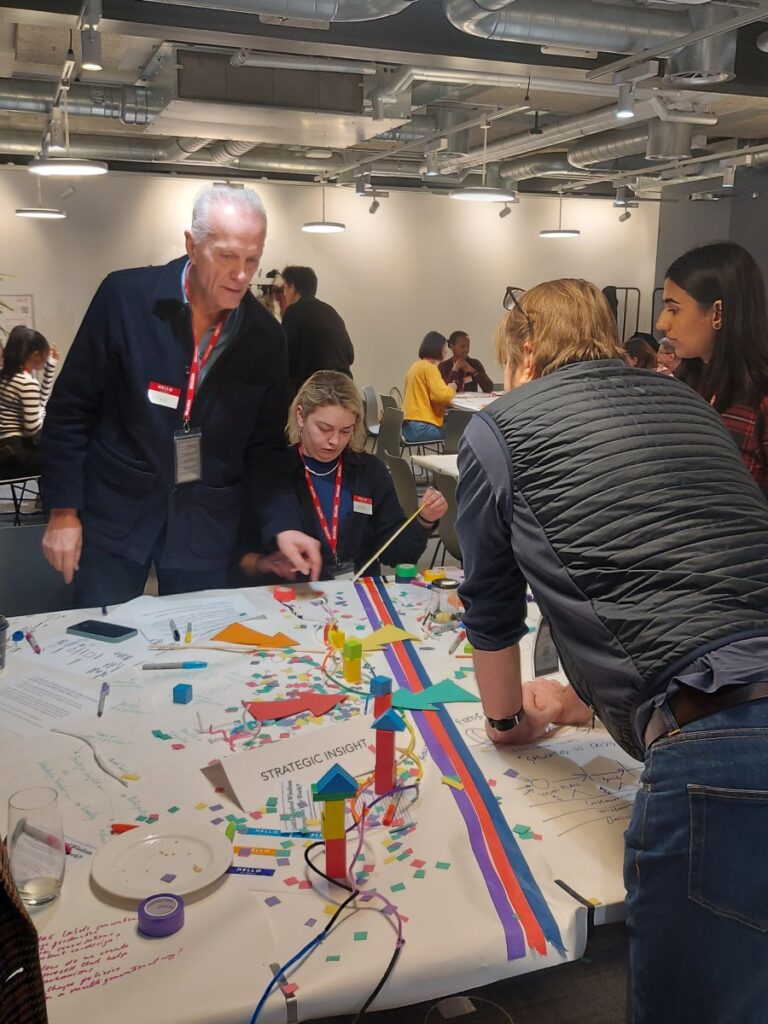

This was a great group to explore what a more multigenerational approach to practice could achieve in the context of the built environment.
The theme for this event, exploring multigenerational practice, had emerged through a series of conversations we had had over many years with practitioners of all ages, having noted some recurring observations and frustrations being expressed. Many found that they had limited opportunities for reciprocal exchange across different ages and levels of seniority within practice teams. Others noted that cycles and trends in practice, policy and education have an impact on how different generations of professionals are shaped and how they evolve their own practice over time. Quite often, decision-makers tend to shape their organisational practice in their own image.
The Glass-House has found this generational divide to be particularly present when it comes to working with communities through design, which has gone in and out of fashion over the last few decades. Community engagement is now an area of expertise that design teams are expected to bring to commissioned projects, and effective engagement should ideally involve people across generations. So surely, there is also a role for multigenerational practice to play in engaging different generations within communities more effectively and equitably in placemaking.
At this event, we were keen to explore the benefits of bringing together complementary skillsets and experiences of practitioners at different stages in their careers. Could this improve the quality and efficiency of work, and also potentially increase personal and professional growth and workplace satisfaction for all involved?
Setting the Scene
When our event participants arrived, we asked them to choose a lens through which to explore multigenerational practice and placemaking. For these lenses, we borrowed some terms from the Arup lexicon including: specialist knowledge, efficient delivery, strategic insight and knowledge transfer. We also included the lens of social value. Interestingly, participants gathered round tables in clusters, rejecting the lens of efficient delivery. We let them and concentrated on the other four lenses.
Each group was tasked with talking about what their table lens meant in the context of their own practice and how it impacts on how they engage with communities through design & placemaking. They were then asked to brainstorm ideas for a particular activity, way of working or policy that would support a more multigenerational approach within their practice. We asked them to also consider how it could help them work with more diverse communities, and different generations within them, to shape multigenerational places. Here are some of the ideas and propositions that emerged:
Social Value

This group started their pitch by setting out their understanding of social value – as the inherent benefits that design brings for local people, whether by producing high quality built outcomes or through the process of designing with people. They noted that the reality of delivery is that from inception to construction, projects are split into lots of different segments and each team or organisation delivering one of those segments does their own social value work. This means that the approach to social value is fragmented and there is not an overarching strategy for it across the whole project.

Their pitch was for a community “doula”, which could be a person or organisation within the community who could be the golden thread of social value within a place. This role should be embedded in different places within a community, and funded through levies such as Section 106 or CIL. The doula would be skilled at connecting within different groups and generations within their community and able to work with other local doulas and project leaders to champion and develop local strategies for social value.
Specialist Knowledge

The Specialist Knowledge team started by thinking about how practitioners can connect their work with the specialist knowledge present within any community. They noted that when engaging with communities, practitioners tend to take their ideas and expertise into communities to talk about projects they are working on (using inaccessible language) and do not necessarily tap into local expertise to enrich their work. This led them to think about approaches to connecting with local people in a different way, and unearthing, connecting and mobilising knowledge and skills across generations.
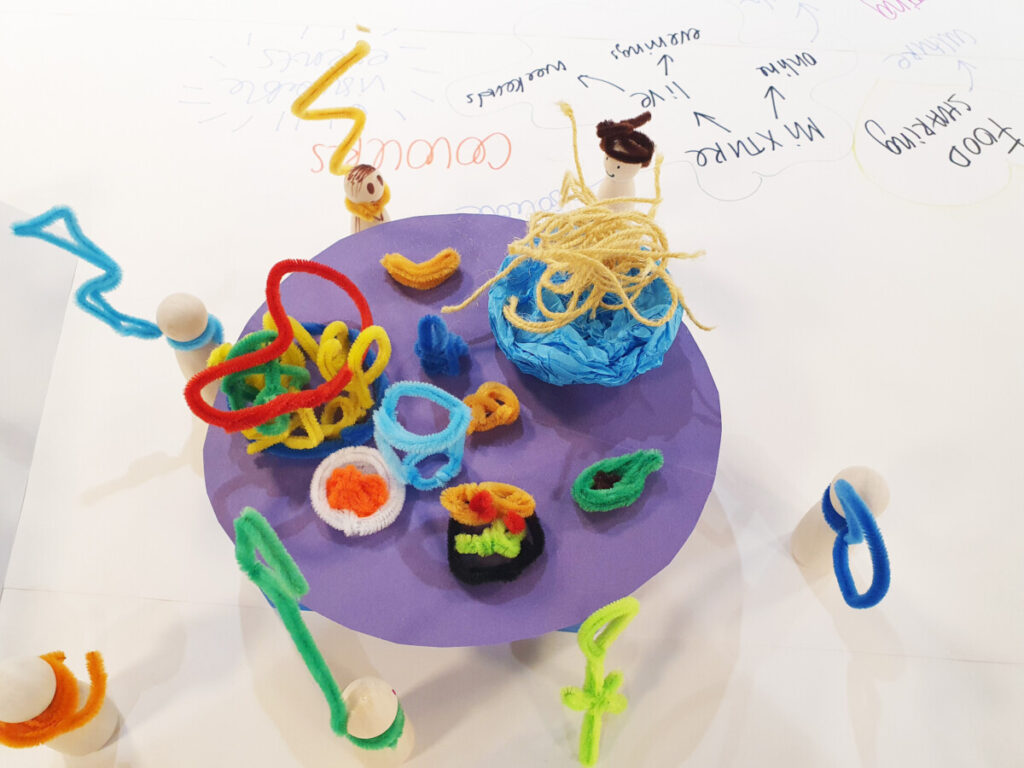
They branded their pitch as “Let’s eat”, deciding that the thing that connects all of us is food. Creating informal and welcoming spaces to share a meal is a wonderful way to bring people of different ages, cultures and with varied specialist expertise together. It is not only a leveller, but also a way for people to connect with others with a spirit of generosity, confidence and curiosity. They saw eating together as a crucial way to get people connecting and collaborating with each other, whether within a community, a practice or to build trust and relationships between project teams and the communities in which they are working.
Knowledge Exchange

Our Knowledge Transfer group quite quickly rebranded their table, opting to focus on knowledge exchange rather than knowledge transfer. They felt that the word transfer felt too one-directional and preferred the reciprocity of exchange. This group spoke of the importance of creating safe spaces for reciprocal knowledge exchange and collaboration, which feel comfortable and welcoming to people of diverse ages, experiences and lived or professional expertise. They made the case for creating comfortable spaces that “cultivate confidence” for everyone there to take part.

Whilst they considered all sorts of in-person and digital knowledge sharing, from social media platforms to seminars, they too settled on the power of food as a way to create those comfortable spaces to connect people and knowledge. They felt that creating such safe reciprocal spaces around food could help facilitate exchange for teams working together within a practice, teams working with communities, or to enable different generations and cultures within a community to connect through sharing meals, recipes, cooking techniques and stories.
Strategic Insight

The Strategic Insight group considered the intergenerational potential of developing a long-term vision within communities. They noted that building a vision in today’s world will never be a linear process. It will involve step changes, and will need to build on the insight of different generations within a place. Each can bring a different perspective on the past, present and future and help imagine and plan for short, medium and long-term goals and strategies.
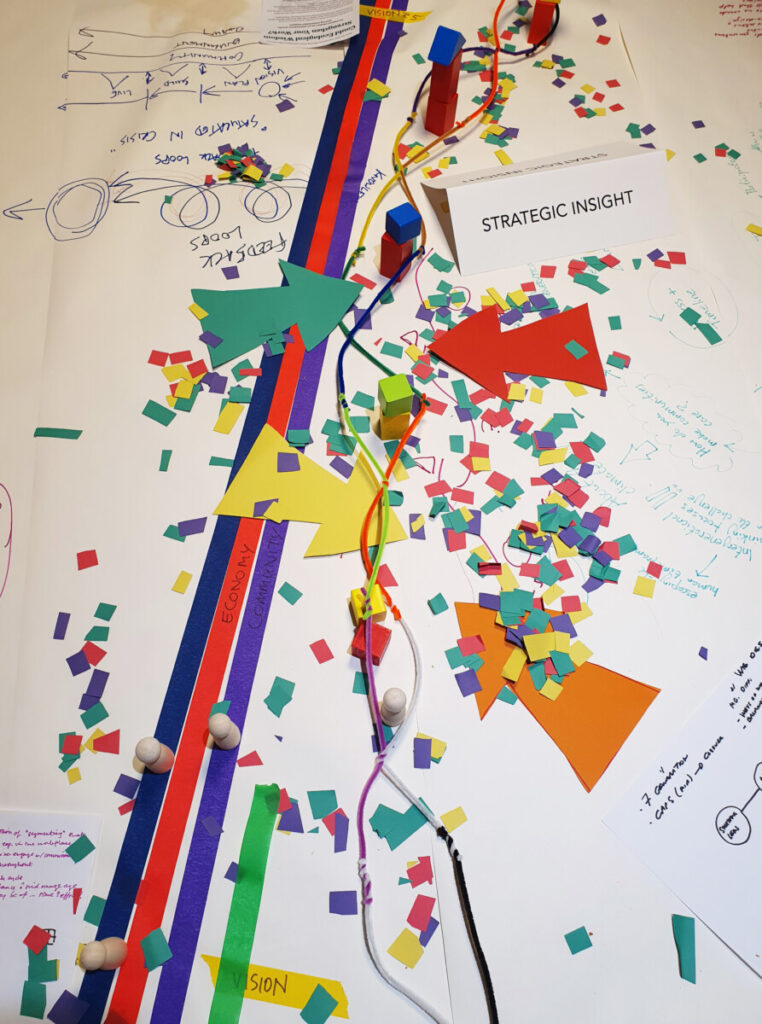

Their model depicted a kind of double helix structure, which represented the evolving nature of a vision for a place that is never simply linear. It also illustrated the continuums within a place that run alongside and inform any project, such as health and wellbeing, economy and community. They positioned blocks along the path of their vision helix to represent stages over an extended period of up to 25 years, with loops circling round to illustrate continuous feedback, reevaluation and iteration. Confetti that was sprinkled on either side and across the table represented the many ideas and contributions of people, some of which make it into the vision and some not, but all with their place in the collective journey.
Key Themes
The conversation that followed brought together some interesting threads across the pitches and group work:
- We need to break down the hierarchical idea that one person’s or one type of knowledge is better than another’s. To do this, we should be creating safe spaces for knowledge exchange and collaboration.
- Every community holds champions who are linked into local networks, who could play a vital role in activating local conversations. These people and organisations need to be supported and empowered.
- Connections within communities can be nurtured both by people, local champions, and by the physical spaces that help bring people together. Creating safe spaces that “cultivate confidence” and nurture collaboration will serve both communities and practice.
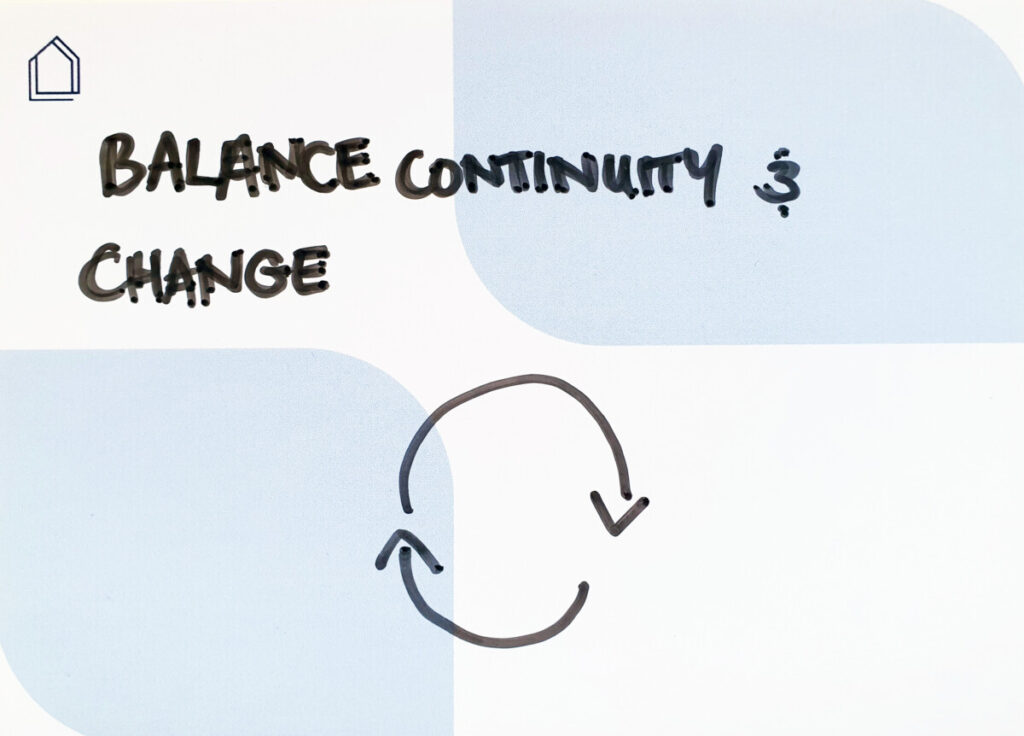
- There is a cyclical nature of life and practice, and we need to recognise that different generations within practice have been educated differently, have worked within different political, cultural and economic landscapes. We therefore need systems and approaches that bring together complementary as well as shared expertise. This can help us prevent the leakage of knowledge as people move on or retire or if institutions are dismantled.
- We need to create more opportunities to break down the hierarchies that exist within practice and create opportunities to bring together different ways of thinking and ways of working. The shared staff lunch is one such example. Different practice cultures can also be created through the physicality of office spaces, for example through hotdesking and seating people at different stages of their career next to each other.
Some of the key takeaways that people shared at the end of the events reflected these themes:


Multigenerational Places: Practice was an illustration of the power of creating those safe spaces for different generations of practitioners to come together and exchange knowledge, experience and ideas. A huge thanks goes to all who took part, and to our colleagues Bettisabel Lamelo and Maria Elges at Arup who worked with The Glass-House to create that space, complete with plentiful food and drink for us to enjoy a delicious breakfast together.